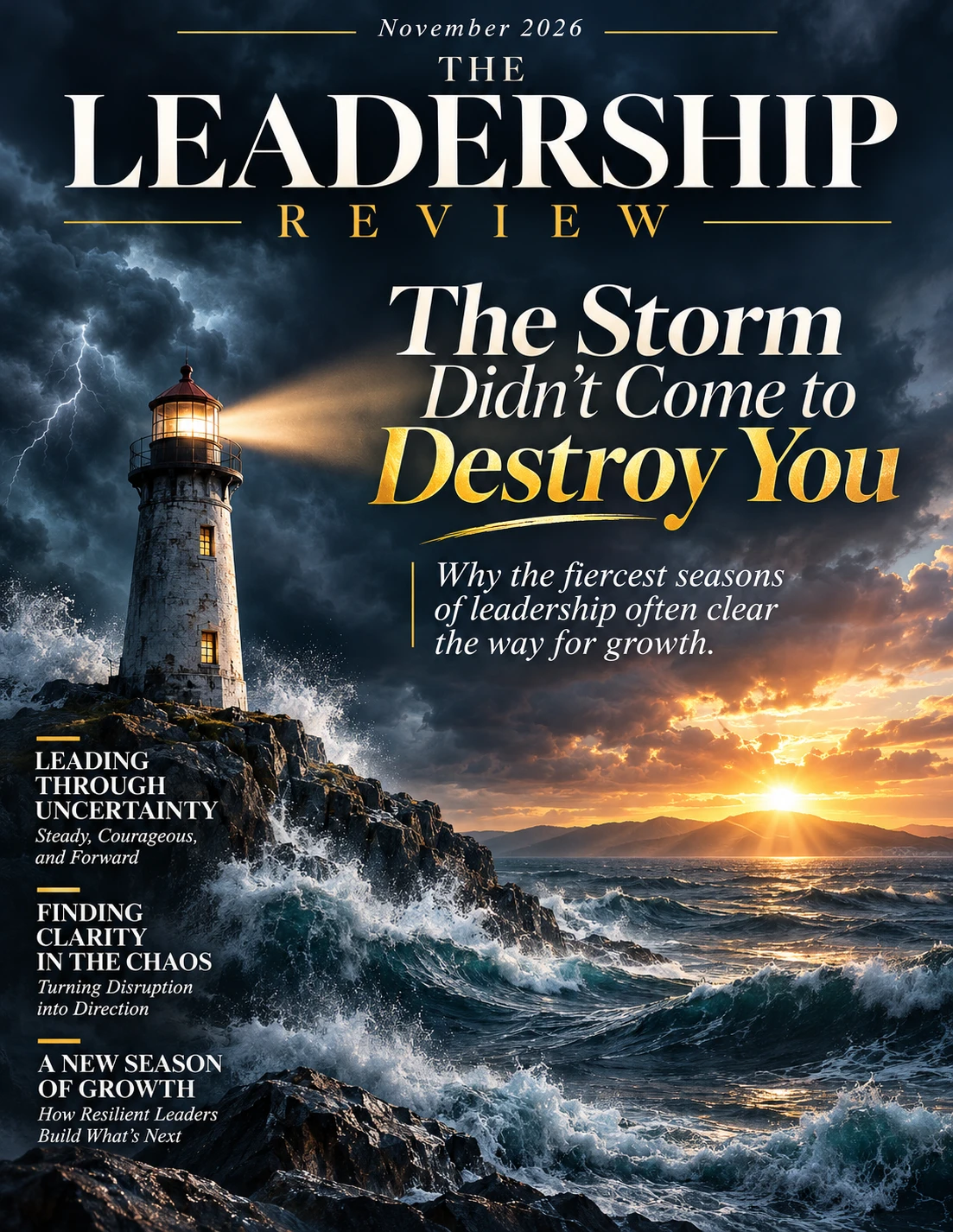
There's something remarkable about a storm.
We spend so much of our lives trying to avoid them. We build shelters, watch forecasts, reinforce our foundations, and pray the winds will pass us by.
But what if we've misunderstood the purpose of the storm?
What if the very thing we're fighting to hold back is exactly what we need to move forward?
I've come to believe that not every storm arrives to destroy something. Some come to clear away what has been standing in the way of something greater.
And sometimes, the most important thing a leader can do is stop trying to save everything the wind is taking away.
You Can't Grow a New Harvest in a Field Full of Dead Crops
Any farmer understands something that many business leaders forget.
You cannot expect a healthy harvest from a field that has never been cleared.
Last season's crops served their purpose. They produced what they could. Some flourished. Others failed. But regardless of how successful that season was, there comes a time when the ground must be prepared for something new.
The dead stalks have to go.
The weeds must be pulled.
The soil must be turned.
And sometimes, nature lends a hand with a storm powerful enough to accomplish what we've been reluctant to do ourselves.
Leadership works much the same way.
We hold on to relationships that have stopped producing fruit. We maintain business arrangements that drain more energy than they create. We protect systems, habits, and expectations simply because we've invested so much time building them.
We confuse longevity with loyalty.
We confuse familiarity with value.
And perhaps most dangerously, we confuse holding on with being strong.
But strength isn't always demonstrated by what you can hold together.
Sometimes it's demonstrated by what you're willing to release.
Not Everything That Leaves Is a Loss
One of the hardest lessons in leadership is accepting that something can have been good for a season without being good for every season.
A relationship can have been valuable.
A partnership can have been productive.
An opportunity can have been exactly what you needed at the time.
And still, its season can end.
That doesn't automatically make anyone the villain. It doesn't erase the good that came before. And it certainly doesn't mean the time invested was wasted.
It simply means that growth sometimes requires change.
The trouble comes when we spend so much energy trying to resurrect yesterday's harvest that we neglect tomorrow's planting.
I've seen leaders exhaust themselves trying to preserve relationships, strategies, and opportunities that have already run their course.
I've been guilty of it myself.
Sometimes we become so emotionally invested in what we've built that we forget why we started building in the first place.
The mission was never to preserve the field exactly as it was.
The mission was to produce fruit.
Storms Reveal What Was Never Rooted Deeply Enough
There's another truth about storms that deserves our attention.
They reveal foundations.
When the skies are clear and the winds are calm, almost everything looks strong.
It's easy to speak about loyalty when nobody has to sacrifice anything.
It's easy to celebrate partnerships when the money is flowing.
It's easy to claim shared values when those values haven't been tested.
But let the winds pick up.
Let circumstances become uncomfortable.
Let expectations collide with reality.
Suddenly, you discover what was deeply rooted and what was merely standing nearby.
That discovery can hurt.
But it's also valuable information.
A storm doesn't always create the weakness. Sometimes it simply exposes what was already there.
And as leaders, we have a responsibility to pay attention to what gets revealed.
Not with bitterness.
Not with revenge.
Not with an overwhelming desire to prove someone wrong.
But with wisdom.
Because the next season deserves the benefit of what this season taught us.
The Rain That Disrupts You May Also Be Feeding Your Future
Here's the beautiful contradiction of a storm.
The same rain that floods a field can also nourish the soil.
The same wind that breaks a branch can scatter seeds into new territory.
The same disruption that changes the landscape can create room for life that couldn't grow there before.
Of course, storms can cause real damage. Not every loss is a blessing, and not every hardship needs to be romanticized.
Sometimes the damage requires repair. Sometimes the loss deserves grief.
But even then, we have a choice about what happens next.
We can stand in the mud counting everything that washed away.
Or we can examine the ground and ask what we're going to plant.
That's where leadership begins again.
Not when the storm stops.
But when we decide that the storm will not have the final word.
Stop Begging the Old Season to Stay
There is a particular kind of exhaustion that comes from trying to convince people, circumstances, or opportunities to remain in your life after they've already decided to leave.
We negotiate.
We explain.
We defend our intentions.
We replay conversations and imagine what we could have said differently.
And sometimes those conversations are necessary. Good leaders don't abandon commitments at the first sign of trouble.
But there is a difference between fighting for something worth saving and refusing to acknowledge that a season has ended.
Discernment is knowing the difference.
You can honor your commitments without surrendering your future.
You can treat people with respect without giving them unlimited access to your energy.
You can wish someone well without inviting them into your next chapter.
And you can be grateful for yesterday without allowing it to dictate tomorrow.
That's not arrogance.
That's maturity.
After the Storm, Get Back to Planting
Here's what I know.
The field doesn't become fruitful simply because the storm passed.
Someone still has to do the work.
Someone has to clear the remaining debris, repair the fences, prepare the soil, select the seeds, and show up every morning to cultivate what comes next.
That's the part of leadership that rarely makes the highlight reel.
It's not glamorous.
It doesn't always earn applause.
And often, the people who will one day benefit from the harvest aren't even there to witness the planting.
But that's what builders do.
We build.
That's what farmers do.
They plant.
And that's what leaders must do when life rearranges the landscape.
We don't surrender our vision simply because the scenery changed.
We adapt. We learn. We strengthen our foundations.
And then we get back to work.
A Final Thought: The Field Is Not Empty. It's Ready.
There's a passage in Ecclesiastes that reminds us there is a season for everything under heaven.
A time to plant.
A time to uproot.
A time to tear down.
And a time to build.
We love the planting and building seasons.
We're considerably less enthusiastic about the uprooting and tearing down.
But they're all part of the same process.
Perhaps the storm you're facing isn't the end of your story.
Perhaps the doors closing aren't evidence that you're moving backward.
Perhaps the things being stripped away are making room for opportunities, relationships, and growth you couldn't have accommodated before.
You don't have to celebrate every loss.
You don't have to pretend the storm didn't hurt.
But you also don't have to build a permanent home in the wreckage.
Take what you've learned.
Keep what matters.
Let the rest become part of the soil.
And when the clouds finally break, don't spend so much time staring at what disappeared that you miss what's beginning to grow.
The storm may have changed your landscape. But it hasn't taken away your ability to cultivate a future.
The field is cleared. The soil is ready.
Now, what are you going to plant?
Joseph James is the founder of JJM Agency, a brand strategist, author, and advocate for leadership built on trust, accountability, and purposeful growth.
The Leadership Review explores the principles, challenges, and defining moments that shape leaders who are willing to build something greater than themselves.